BOX4TECH

Search

Total Pageviews

Showing posts with label ipad2. Show all posts

Thursday, March 10, 2011

Apple iPad 2 online sales will start in wee hours

If you're in the market to buy an iPad 2 online tomorrow, you're going to have to wake up a bit early.
Apple this morning announced that online sales of the iPad 2 will begin at 1 a.m. PT/4 a.m. ET, many hours ahead of when the new tablet goes on sale at the company's retail stores.
The company had previously told customers that online sales would begin the same day as the iPad 2's retail release, but had not provided the start time.
Retail availability of the iPad 2 remains unchanged, with Apple beginning sales at 5 p.m. local time at its 236 retail stores as well as at partner retailers like Best Buy, Wal-Mart, Target, and carrier stores for Verizon Wireless and AT&T, the company said in its release.
Along with the start time, Apple also announced early arrivals of the GarageBand and iMovie iPad apps that the company demonstrated during the iPad 2's unveiling last week. Available today, these apps had originally been slated to be released tomorrow to coincide with the new iPad hardware, which in iMovie's case is required to be able to run the video-editing software.
The last Apple product to get an early online sale was the Verizon iPhone, which became available for preordering at 3 a.m. ET from Verizon's online stores, selling out just a few hours later.

Monday, March 7, 2011

The Atrix 4G and our post-PC future

It's more innovative than even the iPad. The basic idea for the iPad (not to mention failed previous attempts at tablets, mostly by Microsoft) has been floating around since the 1980s. The iPad's triumph was in Apple's uncanny ability to sync fresh hardware capabilities with superb software and industrial design, as last week's iPad 2 intro reminded us.
[ Get the latest on the mobile explosion with "Can the Atrix 4G really become your next PC?" and "Welcome to the iPad 2: Inside Apple's new tablet" by InfoWorld's Galen Gruman. | Also see Eric Knorr's "2011: The year personal computing will reinvent itself." ]
The idea behind the Atrix is also more than a decade old -- but much more avant-garde than a tablet. Back in the late 1990s, PC manufacturers talked in hushed tones about a portable "brick" that would serve as your primary computing device and plug into various docks as needed. But that was the PDA era; mobile processors, batteries, and memory were way too wimpy for the idea to bear fruit.
Now, as with the iPad, technology has finally caught up. That's basically what the Atrix is: a brick computer you can use with a dock -- as a desktop or laptop -- or as a smartphone. (In truth, it's a little more complicated; see "Can the Atrix 4G really become your next PC?" and "Test-driving the Motorola Atrix's Lapdock" by InfoWorld's Galen Gruman for details.)
I view the Atrix as a big step toward what I call the "minimal client." The future of computing centers on an individual's data, preferences, and applications, which reside on a server in the cloud. But you need some kind of client to compute.
Unless we're headed to a future of shared kiosks (yuck) or embedded voice-interface computers everywhere (well, someday), it makes sense that the post-PC client would be a high-powered smartphone like the Atrix. It's minimal in the sense that it's a personal-size device with the docking features necessary for you to do real work using a keyboard and screen.
The iPad and iPhone are already headed in this direction. The HDMI connector announced for the iPad 2 also works with the iPhone 4, and of course, Bluetooth keyboards were supported from the beginning.
Now, I realize both iOS and Android have a way to go before they become enterprise-class desktop operating systems. The Atrix gets around that problem with Citrix's ingenious Nirvana software, which provides remote access to Linux and Firefox running on the Atrix's own docking devices, so the smartphone UI and a desktop browser run side by side. In addition, the Atrix runs Citrix Reader, enabling you to open remote Windows desktops sessions.
But these are temporary work-arounds. Android and iOS are the fastest-moving objects in tech -- and when you take into account the breakneck evolution of SaaS applications, it's clear the capability gap between mobile and desktop OSes will soon close for good.
The future, my friends, is client-server, with a client in your pocket and a server maintained by a public cloud provider or your company's data center admins. Instead of a five-year PC lifecycle, we'll have a smartphone lifecycle, although what you buy may depend on how much your employer is willing to reimburse you. I hope, at least, your boss pays for the dock.
This article, "The Atrix 4G and our post-PC future," originally appeared at InfoWorld.com. Read more of Eric Knorr's Modernizing IT blog, and for the latest business technology news, follow InfoWorld on Twitter.

Thursday, March 3, 2011

The iPad 2 is here, but laptops are not going away any time soon

As a self-professed tablet fanboy you’d think I would be preparing for the death of the laptop with the introduction of the iPad 2 and other capable tablets such as the Motorola XOOM. While I like a good tablet in my hands, I am aware enough to understand that the laptop is not going away any time soon, post-PC blockbuster or not.
Laptops have this thing called a keyboard that a tablet is lacking, and it makes a huge difference for users needing to create written content. It may not be the most efficient way to get lots of text into a document, but it is far better than alternatives. Say what you will about typing on a laptop keyboard, it is much better than tapping fake keys on a screen.
Don’t get me wrong, tablets will indeed take sales away from laptop makers. There are a lot of folks who dont create much written content who will be happy without a physical keyboard. Sales of tablets will continue to grow at a fast clip, especially with lots of products about to hit the market that provide choice. But laptops aren’t going anywhere, in fact maybe competition from this unexpected source will drive notebook prices down.
I started thinking about this tablet/ laptop thing after a visit from my step-daughter last night. She brought our grandbaby over for a visit, and while we were cooing over the baby she noticed the Motorola XOOM sitting on the coffee table. She picked it up, and was instantly hooked.
She uses a netbook at home, but like a lot of folks her usage is confined pretty much to online activities. She got excited the longer she played with the XOOM, as these online activities fit the tablet perfectly. She is now seriously considering replacing her netbook with a tablet of some kind, as it fits her lifestyle.
So how does this back up my statement that the laptop is not going to disappear in favor of tablets? Listening to her describe how perfectly the tablet fits her current lifestyle, I realized that is only temporary. In just a few years her daughter will be heading off to school, and based on my experience with our kids I know that’s when she’ll need a laptop, no matter how prevalent tablets become between now and then.
Schoolkids are expected to use laptops for homework, and with particular software tools. That means Microsoft Office, and not a generic equivalent. Assignments have specific guidelines which basically requires a laptop with web connectivity, running Office. This is a good thing, as in addition to enforcing uniformity in the student’s work, it insures they will get experience using the tools that are in common use.
It is important that kids get exposure to these tools commonly used in the workplace, and this means computers with keyboards. The training wil prepare them for the real world, and that does not mean touch tablets. The enterprise may start incorporating tablets in the the workplace, but on a limited basis. There are too many factors that will make laptops the preferred computing tool in the enterprise, so kids will need to learn how to use them.
So laptops are here for the duration, and that’s a good thing. The more choice we have determining the tools we use, the better. I love my tablets, but I need the keyboard.

Kick off your day with ZDNet's daily e-mail newsletter. It's the freshest tech news and opinion, served hot. Get it.

Souce: ZDNET

Apple Unveils the New iPad 2 Dock

Following yesterday’s iPad 2 announcement and the unveiling of the very stylish “Smart Covers”, Apple unveiled a few more accessories. One of those accessories is a new iPad 2 Dock.
The new stylish dock is a center piece for Apple’s newest gadget.
The new dock is specifically designed for iPad 2, and it gives you access to a port for syncing or charging the tablet, and also includes an audio line out port for connecting to speakers via an optional audio cable.
The new iPad 2 features a very sleek design. New buyers will certainly want to sit the new tablet upright in the dock, and display it on a desk or countertop while hosting a party and playing your latest tunes on your favorite speakers. The dock also supports other iPad accessories, such as the Apple Digital AV Adapter and iPad Camera Connection Kit. You could always use the iPad 2 as a picture frame as well.
It’s worth noting that the new iPad 2 dock has been slightly re-designed with a small lip at the front. The new dock is priced at $29, and should be available on March 11.
I’m planning to get a white iPad 2. I think it will look just perfect with the new dock.


Apple iPad 2: why tablets are the future of computing


Apple didn’t invent the tablet computer, such devices have been commercially available since the 1980s, but they didn’t invent the MP3 player or the mobile phone either. Instead, they did what they always do: refine the product for their market, make the design as slick and simple as possible and the market it brilliantly. Without the iPad, it’s unthinkable that so many tablets would be appearing in shops today.
Announcing the iPad 2 last night, Steve Jobs talked about it as a "post-PC" device. It's clear Apple considers theses devices to be the future and it's a theme that Jobs has spoken about before. At a conference in June last year, Jobs said: "I’m trying to think of a good analogy. When we were an agrarian nation, all cars were trucks. But as people moved more towards urban centers, people started to get into cars. I think PCs are going to be like trucks. Less people will need them.
"And this transformation is going to make some people uneasy… because the PC has taken us a long way. They were amazing. But it changes. Vested interests are going to change. And, I think we’ve embarked on that change. Is it the iPad? Who knows? Will it be next year or five years? … We like to talk about the post-PC era, but when it really starts to happen, it’s uncomfortable."
Far from being a ‘big iPod touch’, tablet devices are changing the way many people use computers and changing the perception of computers for others. Earlier this week, JP Rangaswami, chief scientist at cloud computing firm Salesforce, told me that he realised the extent of the tablet revolution when he heard about how archaeologists were using them. With fewer holes for dust to get in, no keyboard with moving parts and no need for power or cabling, tablets were perfect for archaeologists in the field. Add in the battery life of an iPad and the fact that it’s easy to use at the strangest of angles - something that’s tricky even with a netbook - and you have an ideal device.
Apple made a similar point in their iPad 2 announcement, showing a video of the original iPad being used in schools and in doctor's surgeries. The message is that this takes computers into an environment where they weren't previously comfortable. Your GP probably has an enormous old PC on his desk but has he ever used it to explain something to you?

Source: telegraph

Wednesday, March 2, 2011

How to recycle your iPad 1 after you buy an iPad 2

Today, Apple unveils the iPad 2. So what happens to all the first-generation iPads? We've got solutions.

Apple announces its eagerly anticipated iPad 2 today, less than a year after the release of the first iPad model. It's been a busy 11 months for Apple, which sold an estimated 14.79 million iPads in 2010, according to counts from the tech website Lilluputing.

But with the iPad 2 on the way, and Apple already clearing stock and ending retailer reorders of the original, what's going to happen to all of those iPads already out in the wild?

 
Best-case scenario: the first-generation iPads will make their way to new owners, or be recycled. Worst case-scenario: they'll end up in the garbage where they will pollute landfills for years to come.
 
Luckily, if you're the proud owner of an original iPad, and looking to replace yours as soon as the new model hits the street, there are several options available for those who wish to recycle or sell their old electronics.
 
1. Apple itself. Apple will recycle any old computer, including iPads, whether they work or not. If it's still in good working condition and can be refurbished and reused, you'll get an Apple gift card for the value of your computer. You don't even need to do much work. Just go to Apple's recycling website, enter in the details of your old device, and they'll send you a box and a prepaid shipping label. Just pack up your old iPad, ship it, wait a few weeks, and you'll get a gift card that you can use at any Apple retail store or their online store.
 
2. Best Buy. If you're not willing to wait for shipping and you just want your old iPad or other computer out of the house, Best Buy will recycle it, often for free, or let you trade it in for a Best Buy gift card. Since Best Buy is an authorized Apple reseller, this might be a great way to get rid of your first-generation iPad and then walk out of the store with a new one.
 
3. eBay. The online auction site's new "instant sale" option (part of the eBay Green Team program) lets you get an offer from eBay itself on many used electronics. As of this writing, you can get $391 for a 64 GB iPad in good condition. Shipping to eBay is free, and they'll clean your device of its personal data before reselling it.
 
4. Craigslist. Maybe you just want to sell your old iPad locally and not worry about dealing with companies or waiting for payment. What better place than your friendly neighborhood online flea market?
 
5. Earth 911. If you've been tough on your old iPad and it doesn't work anymore, you can find all of your local recycling options at Earth911.com. The site will help you make sure it gets recycled in a responsible manner that does not generate any harmful e-waste.
 
Of course, you could always pass on your old iPad to your favorite MNN writer. We'll make sure it gets put to good use.
 
Source: mnn.com

What Will the iPad 2 Look Like?

We’re just hours away from the start of Apple’s presentation on Wednesday at the Yerba Buena Center for the Arts in San Francisco, at which the company is expected to announce the iPad 2.
Rumors of what the new version of the iPad might look like began pretty much as soon as the original was unveiled last year. But over the last few weeks speculation has been bubbling up on blogs and news Web sites, stoked by snippets of information that has leaked out from Apple. The company has declined to provide any details before the announcement.
Here’s a roundup of what’s being said.
According to a number of reports, the new iPad is expected to be thinner than the current model, which will likely cut its weight. This will be a big draw for customers who are contemplating buying a new e-book reader, but are intimidated by the current iPad’s 1.5 pound weight.
The next iPad is widely believed to have a built-in camera, but some say it will have two cameras — one in the front for video chats and another in the back for still pictures. This setup would be similar to the one in the iPhone 4 and iPod Touch.
The rumors about the front and rear cameras are a result of spottings of iPad cases supposedly made for next generation iPads. But there are other clues too. Mac Rumors, a blog that monitors Apple news, discovered three new software icons that take advantage of a camera in a developer release of software for the new iPad. These icons include FaceTime, used for video chatting, and Camera and PhotoBooth, which are both used to take photos.
The new iPad is also expected to have a larger built-in speaker for video and music playback. Customers have complained that the current iPad’s speaker is too quiet.

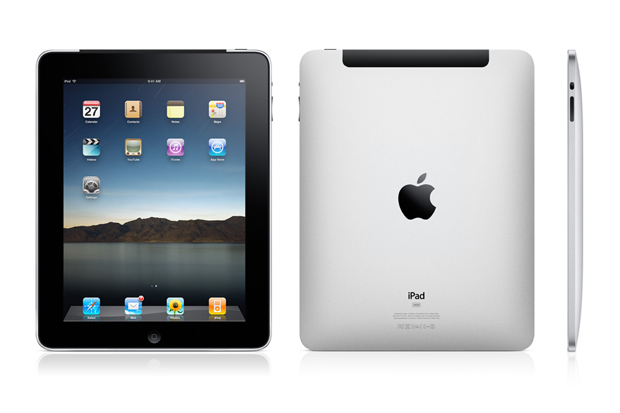
On Monday and Tuesday images began surfacing on a number of Web sites that claimed to be of the next generation of the device, although some technology bloggers said the pictures looked fake. The image above shows the first generation iPad, at right, next to a image supposedly of the new tablet that will be showcased Wednesday.
But the biggest question that has cropped up may be whether Steven P. Jobs, Apple’s chief executive, who is on medical leave, will appear at Wednesday’s announcement to woo the Apple faithfuls while showing off the company’s latest offerings.
We will be live-blogging the event Wednesday starting at 1 p.m. Eastern time.


Tuesday, March 1, 2011

Apple expected to extend lead with new iPad

SAN FRANCISCO (MarketWatch) — Apple Inc. is expected to take the wraps off a new iPad tablet Wednesday as more rivals are flooding the fast-growing market with competing devices.
While few analysts expect anything revolutionary in terms of features and design, most believe that Apple /quotes/comstock/15*!aapl/quotes/nls/aapl (AAPL 348.17, -5.04, -1.43%)  will have little trouble maintaining its market-dominating position for the near term. The iPad has quickly become a key business for Apple, surpassing the popular iPod in revenue contribution and on track to eclipse even the flagship Mac line of computers by next year.
“It’s one of their most important product lines with the iPhone in terms of being a sales and earnings driver,” said Mike Walkley of Canaccord Genuity.
The first iPad went on sale in April of last year. In the first nine months on the market, iPad sales totaled about 14.8 million units, generating revenue of more than $9.5 billion — about 15% of Apple’s total revenue for that periodaround 30 million units sold in 2011, and stay on top of the tablet market despite the coming onslaught of competing products. Offerings are due over the next few months from competitors such as Motorola Mobility Holdings Inc. /quotes/comstock/13*!mmi/quotes/nls/mmi (MMI 29.49, -0.71, -2.35%) , Research In Motion Ltd. /quotes/comstock/15*!rimm/quotes/nls/rimm (RIMM 66.36, +0.16, +0.24%)   /quotes/comstock/11t!e:rim (CA:RIM 64.80, +0.65, +1.01%) , Hewlett-Packard Co. /quotes/comstock/13*!hpq/quotes/nls/hpq (HPQ 42.98, -0.65, -1.49%) , Samsung Electronics, LG, Dell Inc. /quotes/comstock/15*!dell/quotes/nls/dell (DELL 15.39, -0.45, -2.81%)  and Toshiba.
“All the other guys out there are all vying to get 10% of the market,” said Brian Marshall of Gleacher & Co. “Apple is the de facto standard.”
Estimates for the expected size of the tablet market vary widely, but recently have grown significantly. A report by Morgan Stanley in mid-February predicted a “bull-case scenario” of 100 million tablet shipments by 2012. The brokerage said it expected Apple to “remain the dominant player” through this year. Read more...

Source: marketwatch

Seven things to expect from Apple iPad 2

The game changing tablet from Apple, iPad, is getting an upgrade. Less than a year after its launch, many clones have tried to shake the iPad's dominance without much success. Google has been the forerunner in the competition with its Android 3.0 Honeycomb UI. Motorola Xoom, its flagship device was launched on February 24 with dual-core NVidia Tegra 2, 1Ghz processor along with 1Gb RAM and a vibrant 10.1 touch display.

In-spite of all the hardware machismo and eye candy of Honeycomb, the ease of use trophy still goes to the iPad, which manages to hold its own in front of its swanky new opposition.

The key for Apple in this launch will be to adopt a few technologies, which were badly missed in the original iPad (notably Adobe Flash) along with giving it hardware upgrades, so that it is not out-gunned in performance.

Here are some educated guesses on what might be in store:

Cameras: The addition of dual-cameras for Facetime is almost a given. All leaked images of new iPad accessories suggest the inclusion of dual cameras. In the recently launched MacBook Pros, Apple has introduced HD Facetime cameras. We may see them featured in the iPad 2 as well.

Processor and RAM: The competition has been bumping up their hardware in an attempt to compete with the iPad and compensate for the lack of apps on their devices. A minimum dual-core 1Ghz processor based on the A9 Cortex family is expected, but recently a 1.2Ghz dual-core processor has been reported. In addition to the processor upgrades we expect to see a minimum of 512MB RAM.

Retina Display: Ever since the iPhone 4 was launched, everyone expected the iPad to get a similar high-resolution screen in its upgrade but it is highly unlikely. It will be extremely expensive to include such a display on the large 10.1 display. So, we may definitely see a higher quality display, but it may not be as good as the iPhone 4.


USB/ SD Card slots: Recently some leaked images on the web suggested the inclusion of a USB port or an SD card slot. Apple has never adopted a universal connection system so the inclusion of a USB is uncertain. Reports even suggest that Apple has dropped the SD card slot due to engineering issues. We will have to wait and watch on this one.


Who knows Apple may pull a rabbit out of the hat and include the newly launched Thunderbolt connector we saw on the new MacBook Pros.

Storage: The iPad currently tops off at 64GB, which might not be ideal for users who want to carry HD movies. We might see Apple bumping the iPad's memory to 128GB, which will put it near the MacBook Air territory.

Operating System: iPad 2 is expected to launch with iOS 4.3 but many will be disappointed as all the early builds of the software do not indicate any major UI changes. In the SDKs and beta versions of iOS 4.3, Apple has focused on under-the-hood changes, which make the iOS smoother while adding features such as tethering and added Airplay support. For those who are in love with the carousels and widgets found in Honeycomb, the iPad2 may leave you dissapointed.

4G: The next iteration may be going 4G with Apple already adopting Verizon's network for the iPhone. Verizon has a solid LTE network in place and it would be a wise move to release a 4G version specially because Motorola has announced the Xoom would be 4G upgradable. This rumor is strengthened by the fact that Apple has been working with Qualcomm the supplier of LTE chips and in all likelihood the iPad 2 and the iPhone 5 will feature Qualcomm's LTE technology.

Recently Chinese manufacturers reported shortage of displays, which has caused production issues for all tablet manufacturers including Apple so the initial models may not be produced in hordes.

Overall we should not expect any game changing upgrades from Apple. The upgrades should be sufficient for Apple to maintain its dominance in the tablet market as currently they hold the strongest ecosystem just as Microsoft did in the PC market in the 90's. We can also expect a mellowed launch as the announcement may be missing Steve Jobs presentation pyrotechnics, as he is out on medical leave.

Sunday, February 27, 2011

Apple iPad 2 Features: The Likely, the Unlikely and the Impossible

Apple will likely unveil the iPad 2 next week. Possible new features include dual cameras, slimmer body and a more powerful processor. But Adobe Flash support? Unlikely.

 Next week, Apple is widely expected to introduce the next version of its popular iPad.
Apple’s media invitation to the San Francisco event features an iOS calendar icon for March 2, its upper-right corner peeled away to reveal the edge of an iPad. That not only removes any questions over the focus of Apple’s announcement, but also poses a challenge to Motorola, whose Android-based Xoom tablet just hit store shelves.
The Xoom, along with other Android-based tablets either on the market or in the development pipeline, aim to break the iPad’s headlock on the consumer tablet market. It comes with Google’s Android 3.0, also known as “Honeycomb,” which has been optimized for tablets. Hardware includes a 10.1-inch screen (with 1280 x 800 resolution), Nvidia Tegra 2 dual-core processor, front- and rear-facing cameras, and 32GB memory.
Pair those specs with an $800 price tag, and it seems clear the Xoom is aiming at the market segment currently occupied by the highest-end iPads. But Apple isn’t a company to take challenges lightly: by all indications, the next iPad will include a number of features designed to keep the tablet on top of the market.
And therein lies a bit of a challenge for Apple. Since its April 2010, the iPad has sold around 15 million units. If the next iPad’s new features prove so wide-ranging and spectacular as to instantly antiquate its predecessor, it could irritate a substantial portion of those 15 million users who shelled out hundreds of dollars for their tablet. On the other hand, if the iPad 2 offers only incremental upgrades to the existing software and hardware, Apple could lose ground against increasingly aggressive (and increasingly powerful) competitors.
With that in mind, what potential features will make the cut in the iPad 2?
Front- and Rear-Facing Cameras
Rumors have circulated for months that Apple intends to integrate both front- and rear-facing cameras into the next iPad. That would allow the company to blunt competition from other tablets with a dual-camera setup, while letting iPad users take advantage of the FaceTime video-conferencing application already present in the iPhone and iPod Touch. In addition, an iPad rear camera would likely have the capability to take both photos and high-definition video. Likelihood: Almost Certain
Article from: http://www.eweek.com

Blog Archive