BOX4TECH

Search

Total Pageviews

Showing posts with label iPad. Show all posts

Thursday, March 10, 2011

As Competitors Pop up, iPad Keeps Price Advantage

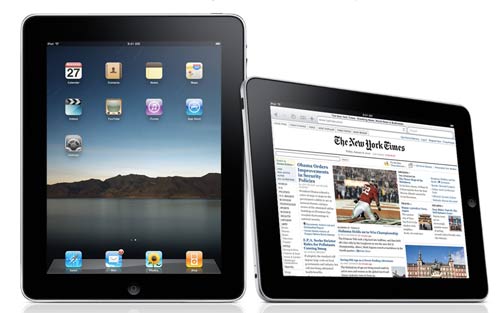
The new iPad model hitting stores Friday comes with several improvements over the original version but the same price tag, hobbling efforts by rivals at breaking Apple Inc.'s hold on the emerging market for tablet computers.
Competitors such as Motorola Mobility Holdings Inc. can't seem to match the iPad's starting price of $499. Tablets that are comparable to the iPad in features cost hundreds of dollars more, while cheaper tablets are inferior to the iPad in quality.
Usually, the early products in consumer electronics, such as the first Blu-ray players or digital cameras, are expensive. Competition then gradually brings prices down. With the iPad, the reverse is happening, spelling trouble for competitors.
It's rare for prices to start low and stay low, yet it looks as if that's exactly what Apple intended. Apple appears to have chosen, right from the start, to make less of a profit from its iPads than it does from iPods and iPhones. That's an odd move for a company that isn't known for cheap products.
Apple's profit margin on the $499 entry-level iPad model is about 25 percent, according to an estimate by Toni Sacconaghi at Bernstein Research.
By contrast, the company's profit margin for all products, before corporate overhead, was 38.5 percent in the most recent quarter. He and other analysts estimate the margin for the iPhone 4 is 50 percent to 60 percent. (Apple charges about $600 for it, though it's cheaper in stores because wireless carriers subsidize it.)
Apple is telling investors to expect overall margins to keep declining, meaning competitors can't expect much of a reprieve.
There are cheaper tablet computers available, but they don't perform as well — with poor screens, poor touch sensitivity and poor software, and overall slowness. Archos sells a tablet that's roughly iPad-sized for $370. Reviewers at CNET and Laptop Magazine say its screen washes out unless you're right in front of it, and it has problems sensing touch.

Monday, March 7, 2011

The Atrix 4G and our post-PC future

It's more innovative than even the iPad. The basic idea for the iPad (not to mention failed previous attempts at tablets, mostly by Microsoft) has been floating around since the 1980s. The iPad's triumph was in Apple's uncanny ability to sync fresh hardware capabilities with superb software and industrial design, as last week's iPad 2 intro reminded us.
[ Get the latest on the mobile explosion with "Can the Atrix 4G really become your next PC?" and "Welcome to the iPad 2: Inside Apple's new tablet" by InfoWorld's Galen Gruman. | Also see Eric Knorr's "2011: The year personal computing will reinvent itself." ]
The idea behind the Atrix is also more than a decade old -- but much more avant-garde than a tablet. Back in the late 1990s, PC manufacturers talked in hushed tones about a portable "brick" that would serve as your primary computing device and plug into various docks as needed. But that was the PDA era; mobile processors, batteries, and memory were way too wimpy for the idea to bear fruit.
Now, as with the iPad, technology has finally caught up. That's basically what the Atrix is: a brick computer you can use with a dock -- as a desktop or laptop -- or as a smartphone. (In truth, it's a little more complicated; see "Can the Atrix 4G really become your next PC?" and "Test-driving the Motorola Atrix's Lapdock" by InfoWorld's Galen Gruman for details.)
I view the Atrix as a big step toward what I call the "minimal client." The future of computing centers on an individual's data, preferences, and applications, which reside on a server in the cloud. But you need some kind of client to compute.
Unless we're headed to a future of shared kiosks (yuck) or embedded voice-interface computers everywhere (well, someday), it makes sense that the post-PC client would be a high-powered smartphone like the Atrix. It's minimal in the sense that it's a personal-size device with the docking features necessary for you to do real work using a keyboard and screen.
The iPad and iPhone are already headed in this direction. The HDMI connector announced for the iPad 2 also works with the iPhone 4, and of course, Bluetooth keyboards were supported from the beginning.
Now, I realize both iOS and Android have a way to go before they become enterprise-class desktop operating systems. The Atrix gets around that problem with Citrix's ingenious Nirvana software, which provides remote access to Linux and Firefox running on the Atrix's own docking devices, so the smartphone UI and a desktop browser run side by side. In addition, the Atrix runs Citrix Reader, enabling you to open remote Windows desktops sessions.
But these are temporary work-arounds. Android and iOS are the fastest-moving objects in tech -- and when you take into account the breakneck evolution of SaaS applications, it's clear the capability gap between mobile and desktop OSes will soon close for good.
The future, my friends, is client-server, with a client in your pocket and a server maintained by a public cloud provider or your company's data center admins. Instead of a five-year PC lifecycle, we'll have a smartphone lifecycle, although what you buy may depend on how much your employer is willing to reimburse you. I hope, at least, your boss pays for the dock.
This article, "The Atrix 4G and our post-PC future," originally appeared at InfoWorld.com. Read more of Eric Knorr's Modernizing IT blog, and for the latest business technology news, follow InfoWorld on Twitter.

Saturday, March 5, 2011

Apple iPad 2: 10 Big Questions

You have to hand it to Apple CEO Steve Jobs. No matter how ill he may be, his showmanship and stage presence remain undimmed. So much so that it took, as it often does, days for the euphoria of the Apple iPad 2 unveiling to wear off. As that happened, though, I, like others, started to have these little, "Hey, wait a minute…" moments. And from there, the inevitable questions about the latest magical device from Apple started piling up. Here are the ones I've been considering or hearing from others. Fortunately, I think we have answers for virtually all of them.
1. Why No Memory Specs?
Apple's busy touting the iPad 2's huge performance increase (over the original), which comes courtesy of the A5 chip. That makes sense, a dual-core processor should beat the pants off a single core CPU. However, as with any computer, the CPU is only part of the performance story. What's the easiest way to increase system performance? Add memory. We know that the first-generation iPad has 256MB of RAM, but Apple isn't saying how much is in the iPad 2. "More" seems like a reasonable guess.
2. Why No 4G?
Apple's new best friend, Verizon, has a brand-new LTE network, but you won't find 4G on the new Verizon iPhone 4 or the latest-gen iPad. Why is that? Price is one reason: Adding a 4G radio would certainly have increased the price on the top-of-the line iPad 2. Also, Apple pays pretty close attention to the market and early market research indicated that almost 50 percent of potential iPad buyers were picking up a Wi-Fi-only model (Apple does not break out Wi-Fi-only iPad sales figures). I have a 3G-ready iPad, but I've never activated the service (I find ample Wi-Fi access almost everywhere I use my iPad). I suspect that's a common scenario. If a good percentage of iPad owners aren't using 3G—even when they have it—why would Apple jump to introduce 4G? Read more...

Source: pcmag.com

Friday, March 4, 2011

iPad trade-in economy explodes

If the burgeoning trade-in activity for the original iPad is any indication, sales of the iPad 2 could exceed even the most brazen predictions.
Trade-in programs from Gazelle, eBay and NextWorth are all reporting sustained levels of user interest. Meanwhile, Apple is giving some recent iPad 1 buyers a $100 discount.
Trade-in offers draw customers by the thousands
Gazelle.com was one of the first "reCommerce" companies to advertise and promote its buyback rates for original iPad units. Higher than expected demand, coupled with Apple's decision to drop the price of original iPad units by $100, forced the company to adjust its rates just hours after the Apple keynote. We spoke to Kristina Kennedy, who's in charge of branding and communications for Gazelle, about the first day trade-in figures and projections for the future. Kennedy told us that Gazelle saw more than 2,500 iPad trades on Wednesday paying out in excess of $1 million.
As of Thursday afternoon, more than 1,000 trades have already cleared the site. Kennedy expected to see more than 2,000 trades for Thursday alone.
Historically, Kennedy says, trade-in volume has been an accurate projector of sales for an upcoming product. But the iPad has exceeded the company's expectations. When the iPhone 4 was announced in June, Gazelle saw around 1,200 trade-ins the first day. That included all iPhone models, from the original iPhone to the iPhone 3GS.
First day iPad trade-ins were nearly double that. Read more...


Wednesday, March 2, 2011

Apple iPad event: Why Apple is still ahead of the pack

Apple chief executive Steve Jobs poses with the Apple iPad Photo: REX FEATURES

Apple has led the way in the tablet market and this evening's launch of the iPad 2 will keep them ahead of the competition.

When Steve Jobs took to the stage in San Francisco last January to announce the iPad he presented the world with a device he called “magical”. Apple fans were enraptured but the sceptics dismissed the new tablet computer as merely ‘a big iPod touch’.
On the face of it, that’s what the iPad is but to truly understand what makes it ‘magical’ you need to get your hands on one. It responds so perfectly to the touch that it really feels like you are moving objects around with your fingers. It’s seamless; at no point do you sense the computer that sits underneath, drawing pixels in response to your touch. That’s the real genius of the iPad - the way it feels - and it’s clear from looking at some of the weaker tablet competitors that such responsiveness is no mean feat.
And this time around are many competitors. The iPad went on sale in the US on Good Friday 2010 and in the UK at the end of May. It quickly surpassed expectations and by the end of the year Apple had sold almost 15 million iPads worldwide. It’s no surprise that the competition wanted to get in on the act.
A year on from the launch of the iPad there are tablet computers everywhere. Toshiba, Asus and even Next - yes, the clothes people - have jumped into the tablet market.
The problem for the competition is that Apple has now delivered a new iPad while many of them are on their first version. The new one is likely to be slimmer, lighter and faster than its predecessor and it comes with a camera too, for videoconferencing.
The new iPad will certainly raise the bar, perhaps only a little, but it will be a higher bar nonetheless. Carolina Milanesi, of analysts Gartner, said that Apple still leads the tablet market. “The experience that you get is a different experience,” she said.
She added that the new iPad “will put more pressure on competitors”.
Apple has been steadily refining and improving its operating system, iOS, since the release of the iPad, while Android users had to wait until last month for Honeycomb, the first version of Google’s operating system to be designed specifically for tablets. Motorola’s Xoom tablet, the first Honeycomb-powered device, has just been released in the US, to generally positive reviews, but still does not have a British release date.
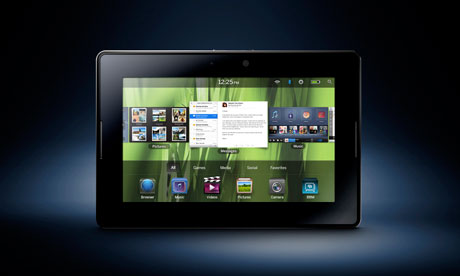
Meanwhile, the much-anticipated BlackBerry PlayBook is likely to launch in the US later this month but even that is not confirmed.
At the moment it is Samsung that holds second place. Its Galaxy Tab, a 7-inch tablet released last September, received very favourable reviews and the company has a new, 10-inch, version ready to go head-to-head with the iPad next month.

Source: telegraph.co.uk

Would Android apps on BlackBerry be a smart move for RIM?

Nokia CEO Stephen Elop described the smartphone market as a "three-horse race" at the Mobile World Congress, with those horses being iPhone, Android and Windows Phone 7.
His omission of BlackBerry seemed strange, with Research In Motion's handsets still selling like hot cakes to companies, but also teenagers, for whom the BlackBerry Messenger (BBM) service remains the key reason to own a smartphone in the first place.
Even so, Elop's snub reflects a wider tendency in the mobile industry to talk down or ignore RIM's significance as a smartphone force going forwards.
A number of developers I spoke to at the Mobile World Congress thought that tendency is unfair, but many admitted that against increasingly fierce competition from Apple, Google and now Microsoft/Nokia, RIM cannot afford to rest on its laurels.
Few suggested that the company should take off its blinkers and hitch its saddle to one of the frontrunners in the smartphone race, but it seems that could be on the cards. Could BlackBerry's riposte to Elop be a partnership with the platform he spurned: Android?
Mobile startup ShopSavvy suggests so. In a blog post, the company explains that its barcode-scanning app is not available for BlackBerry, yet its analytics software has unearthed some fascinating data.
"According to ShopSavvy's flurry logs someone in Waterloo, Ontario (Canada for the geographically challenged oh and BTW it's where RIM is based) has been running ShopSavvy for Android on various BlackBerry devices," the post explains.
The app has been run twice on a BlackBerry 8600, and once each on a BlackBerry 8300 and 8520 since the start of January. ShopSavvy's news follows speculation earlier this month that RIM's upcoming BlackBerry PlayBook tablet will be able to run Android apps.
"This makes sense since BlackBerry OS can support Java Virtual Machines and it would be pretty easy to compile Android in one of the them," explains ShopSavvy's post. BlackBerry handsets running Android apps? It may be technically possible, but is it a stroke of genius or an act of folly for RIM? Read more...

Source: guardian

How to recycle your iPad 1 after you buy an iPad 2

Today, Apple unveils the iPad 2. So what happens to all the first-generation iPads? We've got solutions.

Apple announces its eagerly anticipated iPad 2 today, less than a year after the release of the first iPad model. It's been a busy 11 months for Apple, which sold an estimated 14.79 million iPads in 2010, according to counts from the tech website Lilluputing.

But with the iPad 2 on the way, and Apple already clearing stock and ending retailer reorders of the original, what's going to happen to all of those iPads already out in the wild?

 
Best-case scenario: the first-generation iPads will make their way to new owners, or be recycled. Worst case-scenario: they'll end up in the garbage where they will pollute landfills for years to come.
 
Luckily, if you're the proud owner of an original iPad, and looking to replace yours as soon as the new model hits the street, there are several options available for those who wish to recycle or sell their old electronics.
 
1. Apple itself. Apple will recycle any old computer, including iPads, whether they work or not. If it's still in good working condition and can be refurbished and reused, you'll get an Apple gift card for the value of your computer. You don't even need to do much work. Just go to Apple's recycling website, enter in the details of your old device, and they'll send you a box and a prepaid shipping label. Just pack up your old iPad, ship it, wait a few weeks, and you'll get a gift card that you can use at any Apple retail store or their online store.
 
2. Best Buy. If you're not willing to wait for shipping and you just want your old iPad or other computer out of the house, Best Buy will recycle it, often for free, or let you trade it in for a Best Buy gift card. Since Best Buy is an authorized Apple reseller, this might be a great way to get rid of your first-generation iPad and then walk out of the store with a new one.
 
3. eBay. The online auction site's new "instant sale" option (part of the eBay Green Team program) lets you get an offer from eBay itself on many used electronics. As of this writing, you can get $391 for a 64 GB iPad in good condition. Shipping to eBay is free, and they'll clean your device of its personal data before reselling it.
 
4. Craigslist. Maybe you just want to sell your old iPad locally and not worry about dealing with companies or waiting for payment. What better place than your friendly neighborhood online flea market?
 
5. Earth 911. If you've been tough on your old iPad and it doesn't work anymore, you can find all of your local recycling options at Earth911.com. The site will help you make sure it gets recycled in a responsible manner that does not generate any harmful e-waste.
 
Of course, you could always pass on your old iPad to your favorite MNN writer. We'll make sure it gets put to good use.
 
Source: mnn.com

Wednesday, February 23, 2011

Apple iPad 2 launch slated for March 2

Apple will launch the next generation iPad at an event in San Francisco on March 2, it's been revealed.t's also expected that the new device will go on sale a month later, according to sources.

Apple has booked the Yerba Buena Center for the Arts to launch iPad 2, where Steve Jobs also launched the orginal device.
Speculation in the run up to March 2 is now likely to focus on whether Mr Jobs will will make an appearance at the event.
He has been on medical leave from Apple since mid-January, and was pictured last week leaving a cancer clinic in Silicon Valley. Tim Cook, the firm's chief operating officer, is overseeing day-to-day opertaions in his absence.
The device itself is likely to be thinner and lighter than current iPad models, which have sold more than 15 million units since release last March. Industry watchers also expect iPad 2 to feature a front-mounted camera for video calling, and a higher-resolution screen.

Source: telegraph.co.uk


Tuesday, February 22, 2011

The cost of Apple's 'greed tax'

Growing developer unrest draws a clarification -- of sorts -- from Steve Jobs
REJECTED: Readability's iOS apps
When it looked like Apple's (AAPL) new subscription model was aimed at magazine publishers in New York City, nobody west of the Hudson River seemed to mind.
That changed almost overnight when someone in Cupertino rejected an app for the iPhone and iPad submitted by Readability, a Web service developed in conjunction with Instapaper that offers reformatted articles -- stripped of ads and other distractions -- and shares its revenue with the authors and publishers.
"We believe that your new policy smacks of greed," wrote Rich Ziade, Readability's creator, in an open letter to Apple that was quickly seconded in a blog post by Instapaper's Marco Arment, a writer and developer whose opinion carries a lot of weight in the Apple community.
The shifting tide was succinctly captured Monday by Cult of Mac's Pete Mortensen in a piece entitled "App Store Subscription Plan Demolishes the Appeal of iOS":
"The broad application of Apple's new App Store subscription guidelines to everything from magazines (sensible) to Kindle books (questionable) to Readability (delusional) to Tiny Grab and possibly DropBox (downright silly) could end up being the single-worst business decision the Cupertino Colossus has made in the last decade."
Perhaps it was talk like that that elicited a response to a MacRumors reader from what appeared to be Steve Jobs' iPhone:
"We created subscriptions for publishing apps, not SaaS apps."
SaaS is an acronym for Software as Service, typically a program that resides behind a firewall and offers some kind of useful service, either "pay as you go" or by subscription.
The problem with Jobs' clarification -- assuming it came from him -- is that the rule in the App Store Review Guidelines that caused Readability to be rejected doesn't offer the flexibility he claims:
11.2     Apps utilizing a system other than the In App Purchase API (IAP) to purchase content, functionality, or services in an app will be rejected. (emphasis ours)
It's likely that nobody at Apple really knows how many of the 350,000-plus iPhone and iPad programs in their App Store run afoul of Rule 11.2. It could be hundreds. It could be tens of thousands.
"Since there are so many gray areas," wrote Arment, "and it's very far-reaching, this is going to be a difficult policy to enforce consistently."
Arment rejects the arguments that most critics have raised against Apple's new policy -- that the 30% fee is too much, that third parties can't afford it or that Apple has nor right to impose it (he leaves antitrust concerns aside -- for now).
But one argument that Apple should care about, he concludes, is that "this policy will prevent many potentially great apps, from many large and small publishers, from being created on iOS at all."
"A broad, vague, inconsistently applied, greedy, and unjustifiable rule doesn't make developers want to embrace the platform...
"What if major publishers, such as the New York Times or The Wall Street Journal (whose current app violates this new policy, along with Hulu, Netflix, Kindle, The Economist, and countless others), decide that they don't want to offer their services through IAP (at 30% less revenue per customer) and just cancel their current or future iOS apps?
"Don't we all lose?
"The discussion shouldn't be whether Apple can enforce this policy, but whether they should. And if you look at what this does to developer relations, big and small, it's easier to argue that this is likely to result in more harm than good to the iOS platform."
Also on Fortune.com:
[Follow Philip Elmer-DeWitt on Twitter @philiped]

Blog Archive